
The footnote
Lawyer erroneously waives a dispositive issue re. hearing notice delivery

Today’s post is all about the footnote.
Lorenzo Cruz-Rodriguez was ordered removed because he didn’t attend his immigration hearing (“in absentia”). This happens all the time, and it’s usually hard to do anything about it. Basically, if the government sends you a notice, you show up or you get deported. (See e.g. That Darn Seattle Traffic.)
His lawyer filed a “Hail Mary” appeal to the Ninth Circuit, making some not-very-compelling arguments about jurisdiction. In two brief paragraphs, the Court cursorily dismisses these arguments and upholds the removal order. And that’s the end of the story . . . except for the footnote.
The government gets the address wrong
The footnote begins with this bombshell:
The notice of hearing—without which Petitioner could not have known when he was to appear—was sent to the wrong address (“4620 Pan Am Ave, Chantilly, VA 20151,”) instead of the correct address that Petitioner had supplied, (“14620 Pan Am Ave, Chantilly, VA 20151”).
Whoops! He gave them the correct address; the government sent the notice to the wrong address.
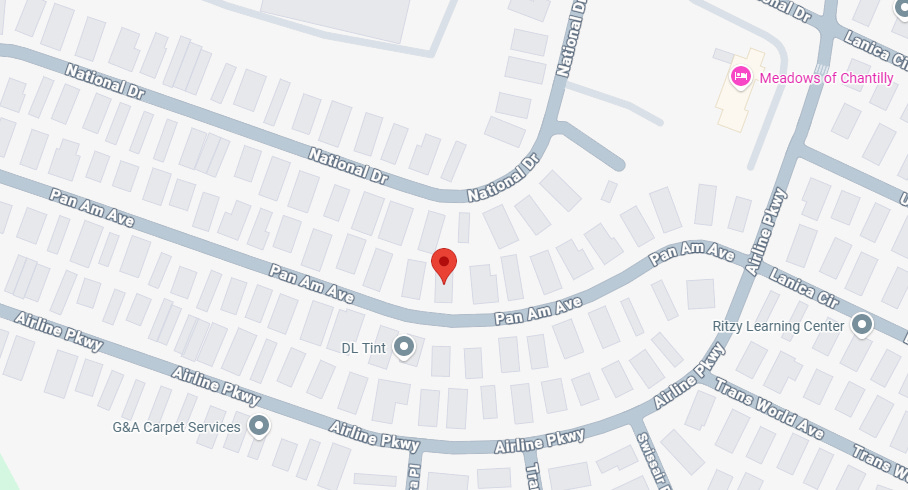
They knew. And they didn’t try to fix the problem.
That notice, which was undeliverable as addressed, was returned to the agency. The agency did nothing to follow up.
Inevitably, when he didn’t show up at the hearing that he didn’t know about, he was ordered removed in absentia.
I gave a letter to the postman / He put it in his sack
Bright early next morning / He brought my letter back
Return to sender, address unknown
No such number, no such zone
This time I’m gonna take it myself and put it right in her hand
And if it comes back the very next day then I’ll understand
Elvis Presley, Return to Sender, 1962
Mr. Cruz-Rodriguez’s lawyer makes a blunder
This was bad but reparable. It’s hard to challenge in absentia removal, but lack of notice is one of the few effective ways. If his lawyer had spoken with his client, Mr. Cruz-Rodriguez would presumably have explained that he only missed the hearing because he didn’t know that it was happening.
His lawyer omitted this argument altogether. He didn’t even raise the issue of whether the letter had been delivered.
Then he did something much worse.
Before the agency and this court, Petitioner’s counsel conceded that the notice was sent to the address that Petitioner provided.
He affirmatively admitted — incorrectly — that the letter was sent to the correct address!
It’s unclear in what context he did this. My guess is that his boilerplate brief template on NTA jurisdiction included something along the lines of “… although respondent later received a notice of hearing …”.
Whatever his reasons, the result was that he waived the only issue that mattered.
Importantly, he waived the issue twice, both “before the agency and this court”. By the time the appeal was heard, everybody (the government, Mr. Cruz-Rodriguez, the immigration judge, and the Board of Immigration Appeals) had agreed — erroneously — that the letter had been sent to the correct address.
That meant that the issue wasn’t available for the Court to consider.
Therefore, we cannot reach the question whether the notice was reasonably calculated to inform Petitioner of the time of the hearing.
The Court wanted to help Mr. Cruz-Rodriguez. But given these concessions, it was procedurally impossible for it to do anything.
The government lawyer sweeps it under the rug
What about the government’s lawyer?
He was aware of the issue:
The government’s brief initially appears to acknowledge that the notice was sent to the wrong address (stating accurately that Petitioner provided the “14620” address but that the notice was sent to the “4620” address and was returned as undeliverable).
He should have been up front about it.
Honestly, he still would have won the appeal. Given the blunder by Mr. Cruz-Rodriguez’s lawyer, he could have simply noted that the issue was waived and the Court was foreclosed from considering it.
But doing so would have meant admitting that the agency made a mistake. It would have called attention to the issue, and possibly opened the door to further arguments in the future.
Instead, the government apparently chose to mislead the Court and hope that nobody noticed.
But later statements in the government’s brief demonstrate a troubling lack of candor: (1) that the notice was “mailed to Petitioner at his Chantilly address,” and (2) that it is a “fact that the immigration court mailed a notice of hearing to Petitioner at the address he provided”.
The Court was displeased.
The government is admonished not to assert that the facts differ from the record, as distinct from noting Petitioner’s waiver of the issue.
This is a very sharp rebuke from a Circuit Court.
The Court does what it can (not much)
The government screwed up by mailing the notice to the wrong address, not doing anything about it when it came back undeliverable, and then removing Mr. Cruz-Rodriguez in absentia.
Mr. Cruz-Rodriguez’s lawyer screwed up not just by failing to notice the error or raise the issue of delivery, but by actually conceding, mistakenly, that the letter had been sent to the correct address.
And the government’s lawyers were rebuked for misleading the Court and trying to sweep the problem under the rug.
The Court was aware that an error occurred. It was procedurally barred from directly helping Mr. Cruz-Rodriguez. But it was at least able to highlight the problem. One hopes that by doing so, they’ve opened a door — perhaps through an “ineffective assistance of counsel” claim — to allow Mr. Cruz-Rodriguez to correct an obvious injustice. The Court’s footnote certainly hints that such a claim would have merit.
https://scholar.google.com/scholar_case?case=3612525100982194902
Cruz-Rodriguez v. Blanche, Ninth Circuit, May 4, 2026 (unpublished)
Amazing how many ways there are to pass the buck &/or dust the footnote under the rug &/or screw in a lightbulb — so it never works.