
Shellacking a judge
Ninth circuit systematically demolishes IJ's "not credible" finding

Pehowa, a town in northern India, is famous for its dhak trees. Because of its orange-red flowers, the tree is sometimes called the “flame of the forest.”

These trees are the world’s most productive host for the lac bug, whose secretions are harvested to make shellac.
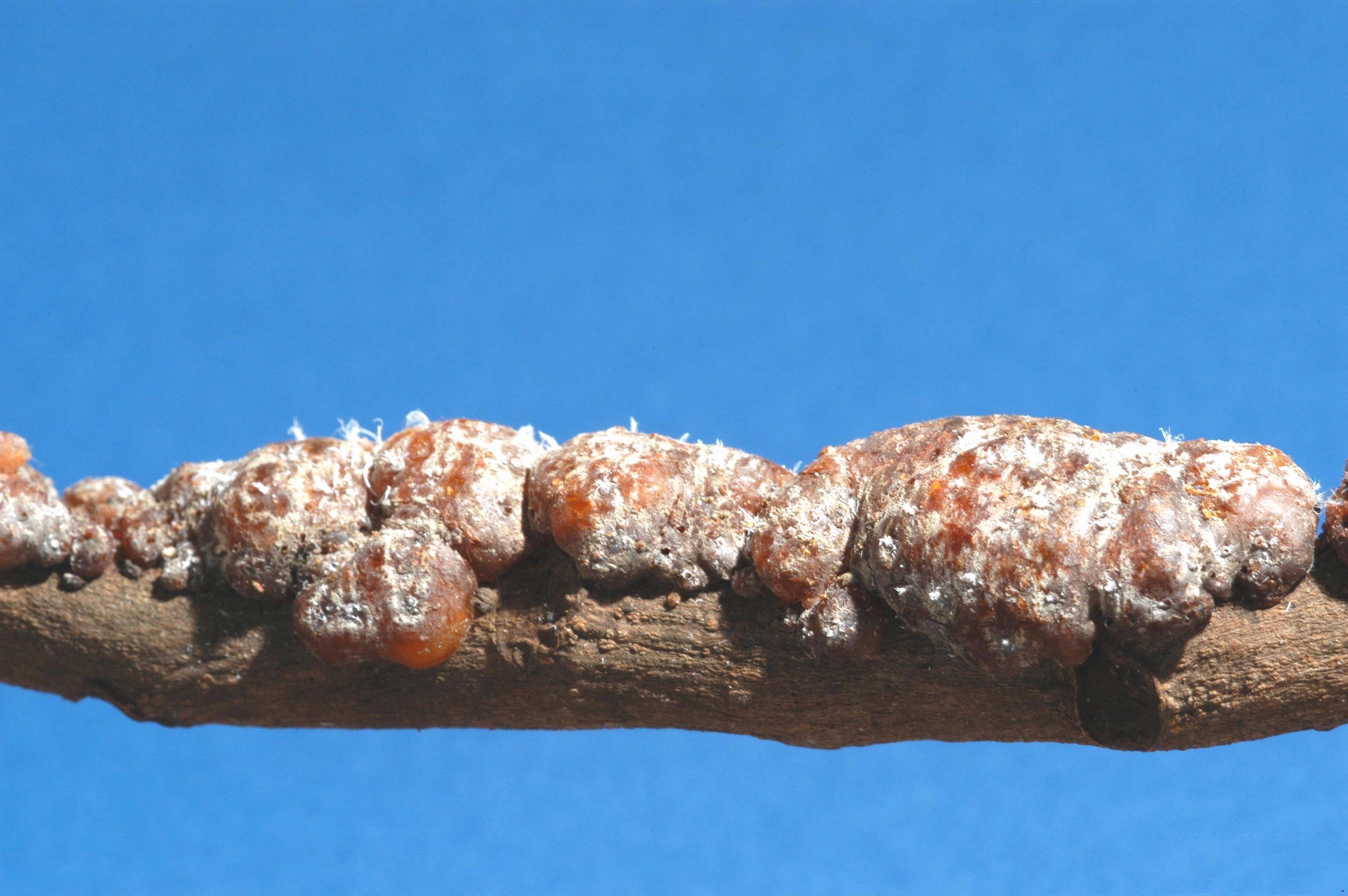
The slang expression “to give a shellacking” means to defeat somebody decisively. Although the entomology is clear, the etymology is disputed. In woodworking, applying shellac is often the final step, so it may be that to “shellack” an opponent is to “finish them off.” Others look to the Yiddish “shlog,” the German “schlag” and the English “slug”, all of which imply a physical blow.
Today, the Ninth Circuit delivers a thorough shellacking to an incompetent immigration judge. It’s fitting that the petitioners’ home town of Pehowa supplied both the literal and figurative raw material.
The truth is out there
For some time, I’ve wanted to write about credibility in immigration law. This is the first in a series of posts.
It’s a fraught subject. A contrary finding usually dooms an application. And the immigration judge (IJ) has very broad discretion. In theory, there are two limits:
They have to provide some justification. For example, they can’t just say (like NRA president North) that you should “never believe an Iranian, because if their lips are moving, they’re lying.”
They have to give the petitioner a chance to explain any inconsistencies.
But, let’s be honest. A prejudiced IJ (no!) can pretty much always find a way to support a finding of “not credible.” No matter how well you prepare, there’s always minor errors of memory, translation, or understanding that can be made to appear fraudulent. When all else fails, IJs can lean on the trusty canards of “furtive glances”, “evasive expressions”, and the old faithful “seemed nervous.”
Appellate Courts don’t have much power to review these findings. They almost always defer to the IJ. (Technically, the standard of review is “substantial evidence,” which more or less means “can you say it with a straight face.”)
This case is one of the few exceptions. The IJ lists four distinct reasons that he found Vijay [an alias] “not credible”. The Ninth Circuit thoroughly demolishes all four.
A digression: props to the Court
In the last few weeks, I’ve spent a lot of time kvetching about Circuit Courts which punctiliously elevate form over substance. To give credit where credit is due, I want to take a moment to highlight two places in today’s opinion where the Court explicitly does the opposite: it treats Vijay with respect and tries to do justice by him and his family.
First: the case is titled “LNU v. Bondi”. With a wry reprimand, the Court notes that “Vijay does not have a last name. Immigration officials added the acronym LNU (presumably for "Last Name Unknown") to his paperwork when he entered this country.” It’s gratifying to see the Court showing cultural awareness and calling out a lack of respect by “immigration officials.”
Second: It appears that Vijay’s attorney made a technical error on his brief. That’s often fatal, but the Ninth charitably notes in a footnote:
Counsel failed to raise this in his brief before this court and advanced a less persuasive argument. Given that this explanation appears on the face of the two affidavits and was raised before the IJ, we decline to ignore it or to treat this explanation as waived. Although we do not normally consider arguments not raised in opening briefs, we may do so if a failure to do so would result in manifest injustice.
The Ninth’s heterodox wish to avoid a “manifest injustice” is indeed welcome.
#1: They all used the same notary
Like the Court, we’ll look at the IJ’s four justifications for his “not credible” finding. The first seems like a nothingburger:
All the affidavits Vijay submitted, as well as his own translated declaration, were notarized on the same day by the same notary in India.
I honestly don’t understand why the IJ thinks this is suspicious. After all, the witnesses know each other, and Pehowa is a small town.
A search for “Notary public in Pehowa, India” returned just one CPA as well as an insurance company, the courthouse, and “Accurate Astrologers (AA)”, which “provides superior astrology consulting services for managing the different aspects of life.” The website doesn’t indicate if AA actually offers notary services, or if this was a bad search result. But since it’s certainly not their specialty, it wouldn’t be at all surprising if pretty much everybody went to the town’s one-and-only CPA.
This was indeed what happened:
But the IJ erred by not addressing Vijay's reasonable explanation for this purported irregularity.
When asked why the same notary was responsible for his declaration and all the affidavits, Vijay explained that his home, Pehwah, “is a really small city,” with one or two notaries co-located with all the local attorneys. Moreover, Vijay explained that his father, who helped him prepare the supporting documentation, arranged for the documents to be notarized together once they were all ready.
Neither the IJ nor the BIA mentioned this reasonable explanation, let alone offered a specific and cogent reason for rejecting it.
For what it’s worth, I’ve never before seen an IJ (or anybody else) claim that it’s suspicious for multiple witnesses to use the same notary.
#2: Affidavits utsed the same words
The IJ’s second attempt looks, at first, a little more defensible. When two witnesses use exactly the same words to describe an event, it’s a common and not unreasonable justification to suspect their credibility.
Two of Vijay's supporting affidavits — from his father, Rakesh, and the leader of his village's council, Ashok — share an identical statement.
Rakesh attests: “Knowing the police is not going to help my son Vijay, he no [sic] other option left but to leave from India with his family.”
Ashok attests: “Knowing the police is not going to help my son Vijay, he no [sic] other option left but to leave from India with his family, his father Rakesh told me on December 15th, 2022 at the market.”
But on examination this is all hat, no sacred cattle:
But the agency overlooked an obvious explanation for the identical statements —one is quoting the other.
The IJ also objected that Ashok appeared to be falsely claiming to be Vijay’s father. But, again, Ashok was quoting Rakesh, Vijay’s actual father. The Ninth continues:
The agency’s concern that Vijay is not the “son” of Ashok suggests that the IJ neglected to read, or grossly misread, Ashok's affidavit.
#3: Descriptions of injuries
Vijay described his injuries:
When first asked about his shoulder injury, Vijay said he “injured” and experienced “swelling” on his right shoulder and that he “received scratches” “on both shoulders.” Later on, Vijay testified that he “got injury” on “both my shoulders.”
So … was he injured on one shoulder, or both? Without asking for clarification, the IJ simply found that
Vijay’s “testimony describing his alleged shoulder injury was inconsistent with the description of his injuries in his medical records.”
Once again, the IJ’s argument doesn’t hold water. First, he didn’t give Vijay a chance to explain the apparent inconsistency:
This purported inconsistency was not an appropriate basis for the adverse credibility determination because the IJ never asked for an explanation, and he was required to. Although Vijay described his shoulder injuries twice, the IJ did not bring this purported inconsistency to Vijay’s attention during the hearing; rather, the first mention of it is in the IJ’s oral decision.
That by itself is enough to discard this “purported inconsistency”; the IJ is required to give Vijay a chance to explain.
But even without an explanation, the testimony simply wasn’t inconsistent.
Nor is the inconsistency supported by the record. Looking at each description of his injuries in context, Vijay consistently testified that both of his shoulders were hurt. Accordingly, Vijay’s testimony is also consistent with his medical records, which note that “both shoulder [sic] were injured.”
#4: “Worker” vs “volunteer”
The fourth and last pillar supporting the IJ’s finding also turns out to be a weak reed.
Relied on the fact that Vijay testified to being a “worker” for the INLD Party, but in one of two relevant entries on his asylum application, he described himself as a “volunteer member.”
Even supposing that Vijay was inconsistent between “worker” and “volunteer”, it’s not at all clear to me why that would be a reason to disbelieve his narrative. But in any event, the apparent inconsistency is readily explained:
Because he does not speak English, an interpreter spoke Hindi with Vijay to fill out and review the form. In every other mention of his involvement with the INLD Party, Vijay consistently referred to himself as a “worker,” including one page below the offending entry on his asylum application, in his testimony, and in his written declaration.
The agency did not give a specific and cogent reason for rejecting Vijay’s reasonable and plausible explanation for this discrepancy.
I am told that the Hindi word karyakarta can be translated as either “volunteer” or “worker”. It’s likely that Vijay used that word consistently, and that it was translated inconsistently. (In an upcoming post, I’ll talk more about how translation errors often lead to adverse credibility findings.)
Pro tip for the IJ
It’s usually pretty easy for an IJ to support a “not credible” finding. In this case, the IJ got too fancy. Poring over the record, he seized upon four apparent inconsistencies, all of which vanished when seen in daylight.
Usually, I focus on the asylum seeker. But after the four-coat shellacking that this IJ received, I’m moved to offer him a pro tip: In the future, keep it simple. When you want to dispose of problematic cases, you’d be well advised to base your findings on the petitioner’s demeanor. Just say that he “looked nervous”. Everybody’s nervous in court; after all, it’s a matter of life and death. And subjective observations are effectively unreviewable, so there’s not a lot that even a well-disposed Circuit Court can do.
In this case, the Ninth remanded, and the case will probably find its way back to the same IJ. He’ll now have to reconsider the case under the presumption that Vijay and his family were credible.
With lacquerware there is an extra beauty in that moment between removing the lid and lifting the bowl to the mouth, when one gazes at the still, silent liquid in the dark depths of the bowl, its colour hardly differing from that of the bowl itself. What lies within the darkness one cannot distinguish, but the palm senses the gentle movements of the liquid, vapour rises from within, forming droplets on the rim, and the fragrance carried upon the vapour brings a delicate anticipation ... a moment of mystery, it might almost be called, a moment of trance.
[Junichiro Tanizaki, In Praise of Shadows]
https://scholar.google.com/scholar_case?case=17757877110863230189
I hope to hear an update especially if this does indeed go back to the same IJ. I wonder if this phrase: “both shoulder [sic] were injured” somehow aided in the "confusion" of "which shoulder?" discrepancy that the IJ used. (and, if in Vijay's shoes, what would Jay-Z do?)